

Psilocybe ingeli: South Africa’s New Heavy-Hitter Mushroom
Meet Psilocybe ingeli — they grow faster than Zaps, punch stronger than Cubes, and are surprisingly easy to grow. Meet the newest heavy hitter for the next wave of psilonauts.


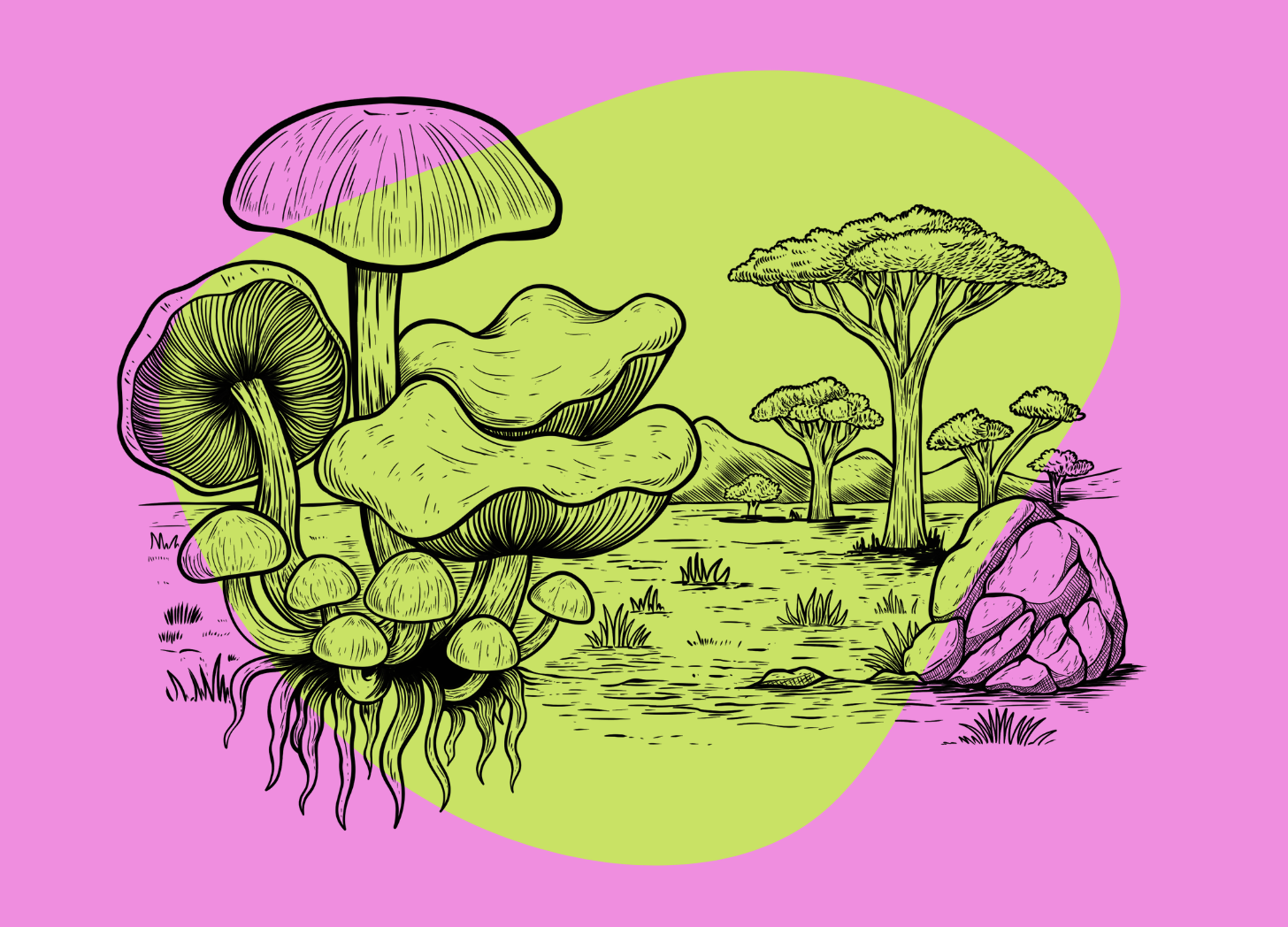
Discovered in 2023, Psilocybe ingeli is a potent new species of magic mushroom native to South Africa.
It’s fast-growing, easy to cultivate, and punches well above its weight in terms of psychedelic potency — with some samples measuring over 3% total tryptamines by dry weight (the average magic mushroom species contains around 1.2%).
Given the combination of its various advantageous qualities, P. ingeli could be a species of great importance to the psilocybin cultivator community… and beyond.
Discovery & Origins
Psilocybe ingeli was first spotted by citizen mycologist Talan Moult, who found it growing in manure-rich grassland in KwaZulu-Natal — the same region that gave us P. natalensis.
While clearing a plot for his beehives, Moult noticed two mushrooms with a distinctive deep-blue bruising reaction. Suspecting a Psilocybe species, he collected samples for analysis.
DNA sequencing confirmed the obvious — this was a brand-new species. The findings were published in Mycologia in collaboration with researchers from Stellenbosch University.
The species is named after the Ingeli mountain range, where the new specimen was found.
Like much of Africa, the area remains vastly under-explored for psychedelic fungi. Chances are P. ingeli isn’t as rare as it seems — just underreported.
Credit where it’s due: A cultivator with the alias PhenoDreamer sourced some spores of this species from a collector in South Africa and has been disseminating them to the wider community. They’ve done much of the heavy lifting in terms of perfecting the cultivation technique for this new magic mushroom species.
You can find spores from PhenoDreamer at exoticmicroscopy.com. 50% of spore sale income goes back to the original collector.

How Potent Is Psilocybe ingeli?
Early lab analysis shows dried P. ingeli mushrooms are shockingly potent — they contain between 2.3% and 3.2% alkaloids by dry weight, which places them among the most potent magic mushrooms known.
💡 To put that in perspective:
Most Cubes clock in around 0.5–1%.
Even strong cultivated strains rarely exceed 2%.
Just 1 gram of P. ingeli could rival a 25–30 mg clinical psilocybin dose.
How to Identify Psilocybe ingeli
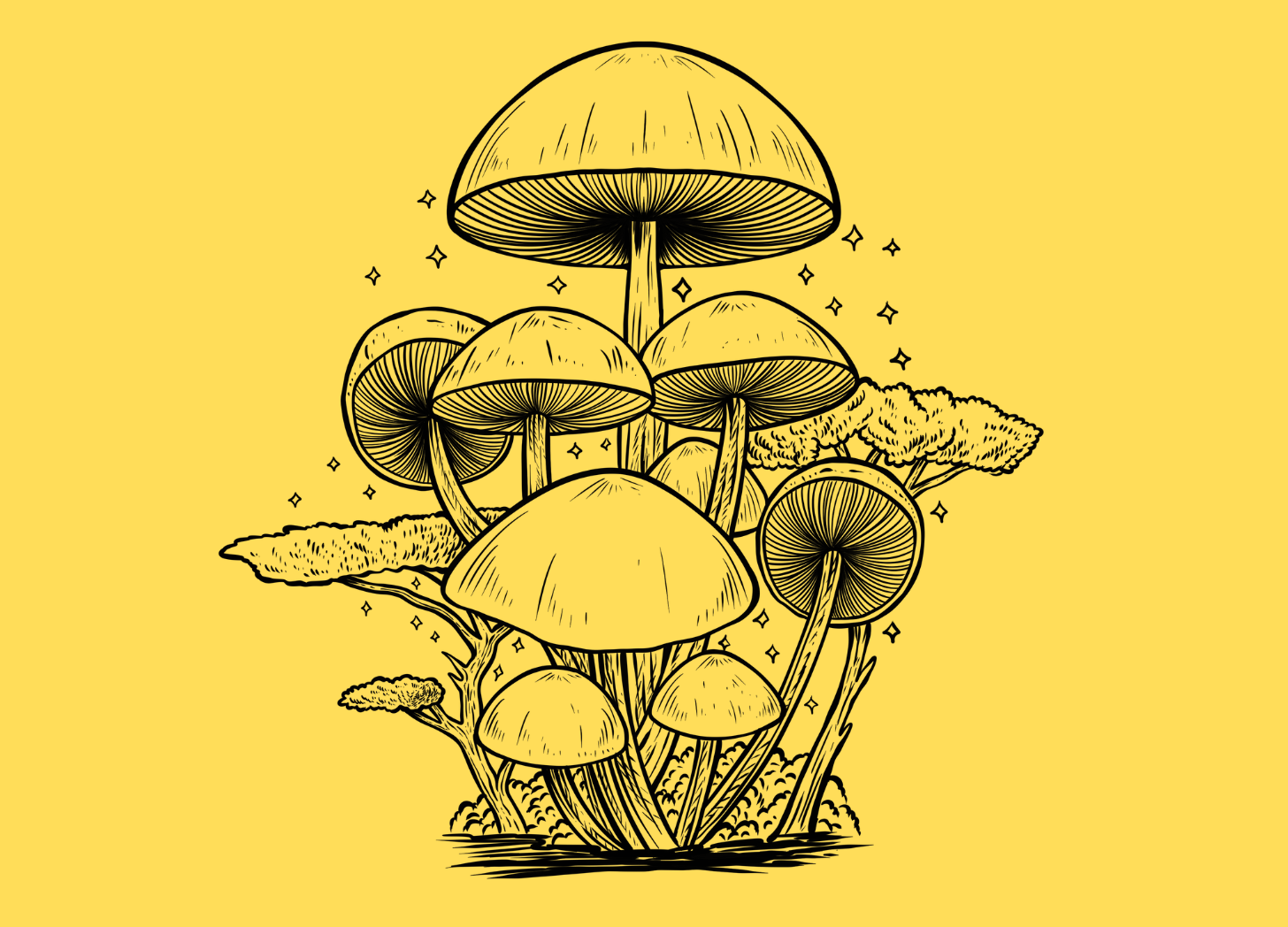
P. ingeli bruises deep blue when handled — a telltale sign of potent tryptamines. Mature caps resemble small wavy caps (Psilocybe cyanescens) in both shape and coloration.
Identity Features of P. ingeli:
Cap: 1–3 cm wide, caramel brown when moist, fading to light gray when dry. Smooth surface with visible gill lines and a peelable gelatinous skin. Slight blueing at the edges when touched.
Stem: 3–7 cm long, 0.2–0.6 cm thick. Caramel-brown with white scales and a fine dusting (pruinose). Base shows white mycelium and bruises blue.
Gills: Light gray when young, dark brown at maturity with whitish edges. Sinuate attachment to the stem (slightly notched).
Spore Print: Dark purple-brown.
Can You Grow Psilocybe ingeli at Home?
Yes — and it’s easier than you'd expect.
Despite belonging to the notoriously slow-growing Zapotecorum group, P. ingeli fruits fast. It grows on a similar timeline to P. cubensis and thrives at room temperature — with a max fruiting temperature of around 82°F (27.5°C).
It’s also much easier to take spore prints from compared to other Zaps.
Chemist Julian Mattucci sums this new shroom up perfectly:
“Basically Zaps that fruit as fast as Cubes, under similar low-maintenance conditions.”
You can purchase P. ingeli spores from:
Spores are sometimes shared on the Reddit group devoted to this species
⚠️ Legal note: Mushroom spores are legal to possess in many countries, but cultivating them is often illegal. Know your local laws — and tread wisely.
→ Check out our updated Spore Vendor List
How to Cultivate Psilocybe ingeli Mushrooms
Good news for home cultivators: P. ingeli is forgiving, fast, and relatively high-yielding. It grows on a similar timeline to P. cubensis, but with a few quirks to dial in.
🧪 Basics
Temperature: Fruits well at room temperature — avoid going over 82°F (27.5°C).
Humidity: Loves high humidity and a moist substrate.
Fresh air: Needs more air exchange than Cubes. Without it, expect “noodly” stems and underdeveloped caps.
Step 1: Inoculate Your Grains
Start with spores or a tissue culture and germinate on agar. P. ingeli mycelium grows cottony (tomentose), not stringy.
From here, you can:
Transfer agar to grains directly
Or make a liquid culture for faster future inoculations
Use sterilized grains like:
Whole oats
Rye
Brown rice
Millet
Once colonized, these get mixed into your bulk substrate.

Step 2: Prep Your Bulk
Best bulk options:
Straight coir
Coir + vermiculite
Optional: Add a little dung (not required)
Hydrate to field capacity — damp enough to feel wet, but not drip when squeezed. Pasteurize with the bucket tek, then mix in your colonized grain. Load it into fruiting trays.
Step 3: Fruiting
Once the substrate is fully colonized, apply a casing layer (~¼ inch).
Use pasteurized Jiffy mix or a blend of:
Peat
Coir
Vermiculite
A pinch of lime (to buffer pH)
Mist lightly as needed to prevent pin aborts. A diffuser tub setup is ideal — it boosts airflow and maintains humidity better than a standard monotub.
Expect pins in about 2 weeks. They take their time maturing, but once the caps curl upward, they’re ready for spore prints.
How To Build A Diffuser Tub Setup (Quick Version)
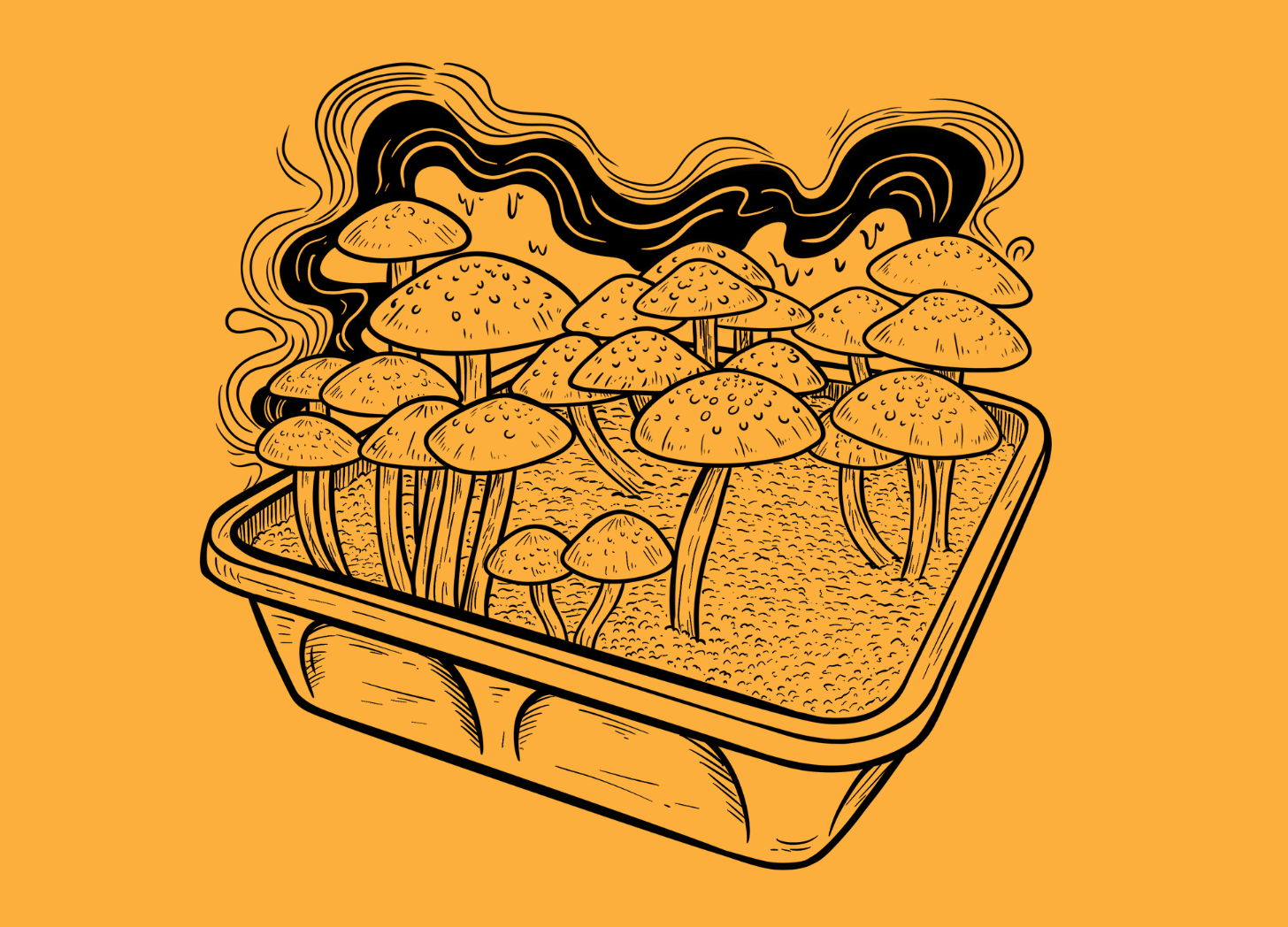
A diffuser tub is a modified monotub that boosts humidity and airflow — perfect for species like P. ingeli that love moist, oxygen-rich conditions.
Here’s how to build one:
You’ll Need:
Clear plastic tub with lid
2+ inches of wet perlite (for base humidity)
1–2 jars of water with lids
Aquarium air pump + tubing
Airstones
Drill + small drill bit
(Optional) Synthetic filter discs for sidewall air exchange
Step By Step:
Add Perlite: Line the bottom of the tub with 2+ inches of wet perlite.
Prepare Water Jars: Fill 1–2 jars with clean water. Drill a hole in each lid to fit the air hose, and a few small “salt shaker” holes to let humidity escape while minimizing splash.
Install Air Pump: Run the air pump hose into each jar and connect to an airstone. This pumps humidified, filtered air into the chamber 24/7.
Drill for Passive Air Exchange (Optional): Add a few small holes along the tub walls and cover with adhesive filter discs. This lets fresh air in while keeping contaminants out.
How to Store Psilocybe ingeli Mushrooms
To preserve potency and prevent mold, dry your mushrooms until they’re cracker-dry — a food dehydrator works best. Once fully dried:
Store in a cool, dark place
Use airtight containers (vacuum sealing optional)
For long-term storage, consider adding desiccant packs
If you're feeling hardcore, store them under argon or CO₂
More Tips: The Art of Preservation: Maximizing Shroom Shelf Life
Tips for Consuming Psilocybe ingeli Mushrooms
It’s worth reflecting on why you want to take these mushrooms. Your motivations, the dosage, the setting, and your mindset — all of these factors will profoundly shape the experience.
According to the Mazatec people of Mexico, who have used Psilocybe mushrooms ceremonially for centuries, it’s recommended to consume them on an empty stomach.
The simplest method is to measure out a dose and chew the mushrooms whole (fresh or dried), then swallow with water. Some groups — including the Mazatec, and the Aztec before them — traditionally consumed mushrooms with cocoa.
Others prefer to prepare mushrooms in chocolates, which makes for a convenient and tasty way to dose.
As an alternative, mushrooms can be prepared as gummies, which are easy to store and dose.
Making mushroom tea is simple. Brew them with a tea of your choice to help mask the flavor. Using dried, powdered mushrooms can improve alkaloid extraction. Avoid overheating!
For a convenient, consistent, and tasteless option, dried mushrooms can be powdered and packed into capsules. Powdering an entire flush at once helps minimize the dramatic potency variation often found in Psilocybe mushrooms. Capsules are especially useful for microdosing and long-term storage.
Further Reading
The Dark Truth About Wavy Cap Mushrooms (Psilocybe cyanescens)
Spore Signals: What Mushrooms Reveal About Our Planet's Health
Inside Holland's Psychedelic Subculture: The Curious Dutch Magic Truffle Market
Enjoying Tripsitter? 🍄
Don’t Journey Alone! Tripsitter was built by a community of psychedelic advocates — but it’s people like you that allow us to thrive.
You can also follow us on Bluesky or subscribe to our Reddit.