

The Medieval Plague That Opened a Portal to the Mind
A medieval scourge that converted bread into poison, burned bodies from the inside, and ravaged the minds of entire villages. Centuries later, a Swiss chemist used it to invent LSD.


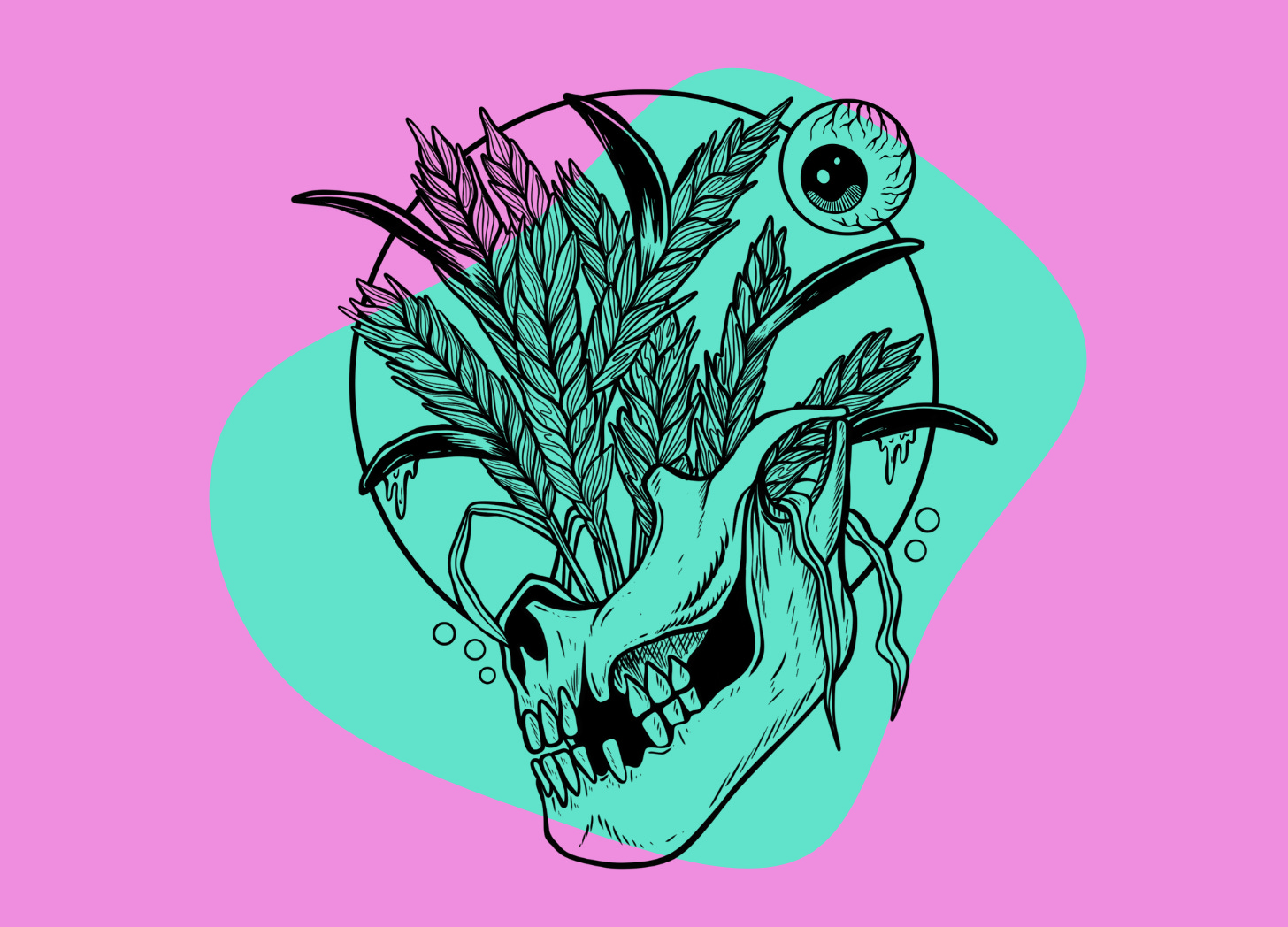
For centuries, European peasants feared a mysterious curse that could strike entire villages without warning.
The curse arrived slowly — first a tingling in the fingers, then blackness and infection. The feet would shrivel, fingers would fall off, and a devastating pain would emerge — burning upward through the body as though the blood was on fire.
As if the pain and limb loss weren’t enough, the sickness could also summon fevered visions, uncontrollable laughter, and hallucinations so vivid it left victims completely mad.
This curse came to be known as St. Anthony’s Fire — named for the monks of the Order of St. Anthony, who devoted themselves to nursing those afflicted with this mysterious condition. At the time, it was believed that the burning sickness was a punishment from god, or the work of witches or demons who lived in the wooded areas near farmlands. Most refused to care for those afflicted, fearing the curse would spread.
Despite hundreds of years of superstition and fear — the terror had nothing to do with spirits or sin. It wasn’t until the 19th century that we would learn the disease came from something far smaller and stranger — a tiny, parasitic fungus that quietly infected local rye supplies.
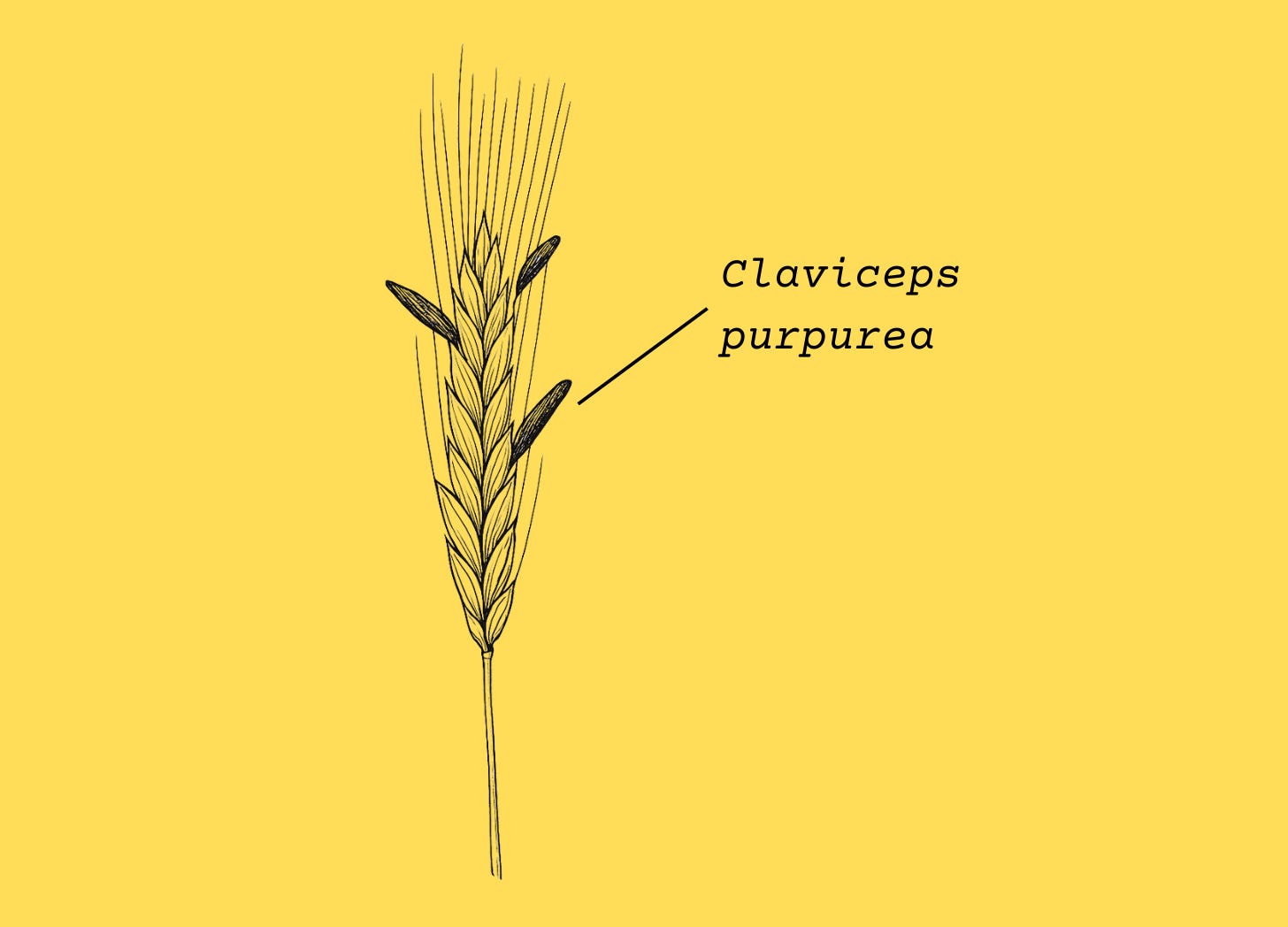
When the dark, horn-shaped sclerotia of the Claviceps purpurea fungus (AKA ergot) slipped unnoticed into harvested grain, the bread became a lethal poison. The fungus’ chemical arsenal — a series of ergot alkaloids — constricted blood vessels until limbs withered, triggered violent seizures, and warped perception with nightmarish, dreamlike hallucinations.
Yet from this medieval nightmare came an unexpected legacy. Chemists would eventually tame the fungus’s deadly chemistry, refining it into a molecule that spared the body and opened the doors of perception.
This is the strange story of how a medieval curse gave birth to one of the most influential psychedelics in history.
A Medieval Plague of Fire
For most of Europe’s peasants, rye was the only reliable grain. Its dense nutritional profile and hardiness to drought, flooding, and poor soil made it a staple from Scandinavia’s ice-scarred fields all the way down to the fertile steppes of the Black Sea.
It was also the grain most vulnerable to ergot infection, which thrived in the cool, damp fields of northern Europe.
As the summer came to a close and the season grew wetter and colder, the parasitic fungus would replace rye kernels with its own black, horn-shaped growths.
If those blackened growths weren’t carefully sorted out the whole village could be poisoned.
In drier years, or in times of abundance, ergotism was uncommon. Bad grains were meticulously removed before the grain was converted to bread. However, in years of famine, the millers were less scrupulous — allowing as much of the grain (infected or otherwise) through to be baked into bread.
The results were, at times, catastrophic.
There were two forms of the sickness described by physicians over the years:
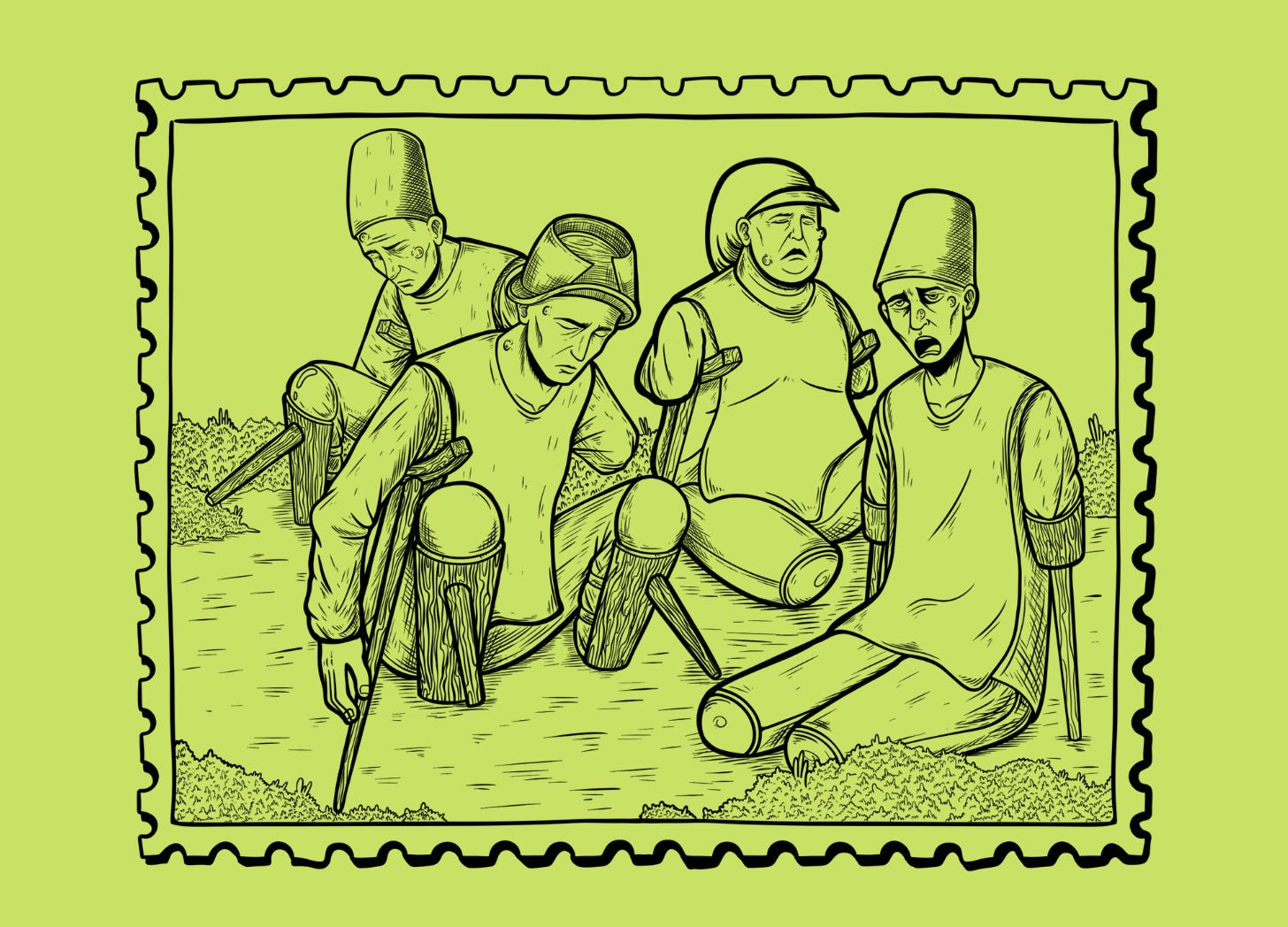
Gangrenous ergotism — a slow, creeping death of the limbs. Fingers and toes turned numb, then black, until they dropped away like burnt wood.
Convulsive ergotism — violent seizures, crawling sensations under the skin, delirium, and visions so intense the afflicted were known to scream, rave, dance, and claw at the air.
By the 9th century, outbreaks were recorded across the Rhine Valley in what is now western Germany and eastern France.
In 1039, Pope Benedict IX granted special privileges to a brotherhood of monks — the Order of St. Anthony — who built specialized hospitals devoted to treating victims of the mysterious plague.
Pilgrims marched for days to reach these shrines, where the Antonine monks dressed wounds, amputated rotting limbs, and prayed for relief from the “holy fire.”
A single epidemic in Paris (1129) was said to have killed tens of thousands of people. That day is still marked in parts of France as the “Feast of the Burning Ones” on November 26.
In 1518, the city of Strasbourg, France, watched in horror as hundreds of people danced in the streets for weeks, unable to stop until death from exhaustion. It was dubbed “the dancing plague.” Famine and hysteria surely played a part, but many historians suspect damp rye and convulsive ergotism pushed the crowd into trance-like spasms and visions.
Even across the Atlantic in the new colonies, ergot’s curse is believed to have reached Salem in 1692. The young girls whose contortions and visions triggered the infamous witch trials lived through a damp New England harvest, and their symptoms — hallucinations, seizures, crawling sensations on the skin — match the classic signs of ergot poisoning.
Even as late as 1951, the little French town of Pont-Saint-Esprit was swept by a bizarre outbreak of ergot poisoning. Residents hallucinated vividly — many claiming that animals were turning into monsters and flames were consuming their bodies. Several died during this outbreak despite the advancements of modern medicine.
Today, these outbreaks are almost unheard of as modern food safety standards have virtually eliminated ergotism.
The Chemistry of Holy Fire
Behind the hallucinations and blackened limbs of St. Anthony’s Fire is a complex chemical arsenal.
The ergot fungus, Claviceps purpurea, produces a family of compounds called ergot alkaloids — among them ergotamine, ergometrine, ergocristine, and ergosine.
These molecules all share a lysergic acid core, the same backbone that chemist Albert Hofmann later used to create LSD.
Ergot alkaloids are pharmacological shape-shifters. They can latch onto multiple receptors throughout the body — serotonin (5-HT), dopamine, and adrenergic receptors, just to name a few — but their most notorious effect is on the blood vessels.
Ergot’s alkaloids clamp down on arteries by activating adrenergic and serotonin (5-HT₁) receptors in vessel walls, choking off blood flow and starving toes, fingers, and entire limbs until the tissue dies, blackens, and drops away.
At the same time, the alkaloids’ unique ability to bind to and overstimulate serotonin receptors in the brain led to hallucinations, delirium, and convulsions.
The amount of Claviceps needed to wreak havoc is surprisingly small, just 5 or 10 grams of the fungus is enough to result in tissue death. However, most historical epidemics were believed to result from chronic, low-level exposure rather than a single huge dose.
Grain was harvested near the end of summer stored to feed villagers throughout the long, hungry winters. Day after day, the poison built up quietly in every meal — until fingers withered, minds unraveled, and whole towns succumbed to the holy fire.
From Poison to Psychedelic
For centuries, ergot was a scourge and, cautiously, a medicine.
Apothecaries used small amounts of ergot extracts to induce labor or stop postpartum bleeding (a practice still used in obstetrics today) and later to treat migraines.
Herbalists of the time knew the risks — a little too much, and the remedy could turn lethal, driving patients to gangrene or madness.
In the 1930s, a young Swiss chemist named Albert Hofmann, working at the pharmaceutical company Sandoz, set out to discover new medicines based on the lysergic acid backbone of ergot alkaloids. His aim wasn’t transcendence — the word psychedelic didn’t even exist yet. His goal was to find molecules that could act as safe circulatory and respiratory stimulants his company could then patent and sell.
Hofmann began building scores of derivatives — tweaking the ergot alkaloid base structures in any way he could imagine.
One of these experimental compounds was lysergic acid diethylamide (LSD-25) — a molecule that would later prove to be the most powerful mind-altering compound ever found.
Hofmann was oblivious to the gravity of his discovery. At the time, he saw little value from LSD-25 as a circulatory or respiratory stimulant. He shelved the compound along with dozens of other “failures.”
For 5 long years, LSD-25 was forgotten, until one day, on a total whim, Hofmann returned to the forgotten molecule.
While resynthesizing a fresh batch of LSD-25, he accidentally absorbed some of the clear, odorless substance through his skin — causing what he referred to as a “not unpleasant, intoxicated-like condition.”
Three days later, curious and cautious, he intentionally swallowed 250 micrograms — and the rest is history. The date, April 19, is now celebrated as Bicycle Day, named for Hofmann’s surreal bike ride home during the world’s first intentional LSD trip.
Hofmann had changed history. His experiment had unwittingly stripped ergot’s deadly vasoconstrictive effects from its psychedelic core.
LSD has a powerful capacity to activate the 5-HT2A serotonin receptors — reshaping both perception and thought — yet it maintains a total lack of ergots vasoconstrictive toxicity, which strangles blood vessels and causes flesh to rot away.
His molecule transformed a medieval grain poison into one of the safest and most mind-expanding compounds ever discovered.
From Holy Fire to Head Trips
Once a scourge that burned villagers from the inside out, the ergot fungus now lives on as the unlikely parent of one of humanity’s most transformational — and safest — mind-expanding tools.
A few of ergot’s potent alkaloids still serve medicine — stopping migraines (ergotamine) and preventing dangerous bleeding after childbirth (ergometrine). But the bread-borne plague itself has vanished with the rise of modern agriculture and food safety protocols.
It’s a strange legacy — a medieval curse that maimed and maddened peasants became the molecular doorway to some of the most profound explorations of the human mind.
Further Reading
Enjoying Tripsitter? 🍄
Don’t Journey Alone! Tripsitter was built by a community of psychedelic advocates — but it’s people like you that allow us to thrive.
You can also follow us on Bluesky or subscribe to our Reddit.