

Spiritual Parasites
Something unseen stirs beneath the surface — feeding, waiting, growing stronger the longer we look away.


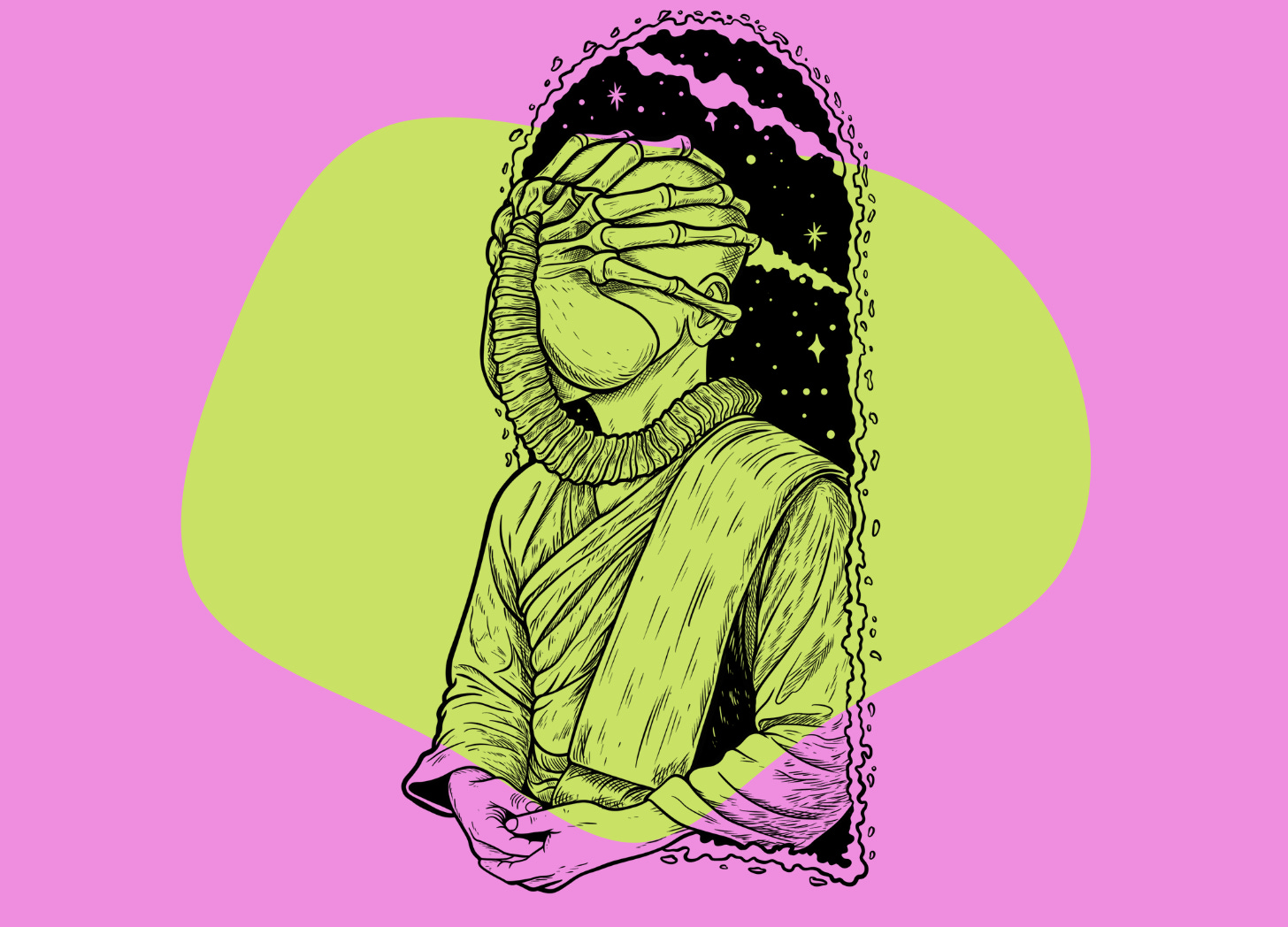
The first sign is a feeling of heaviness. You feel a deep of fatigue that no amount of sleep seems to fix.
Next, your mood dips and your focus fades. Food doesn’t energize you, rest doesn’t restore you. You might feel anxious for no reason at all, or strangely detached. It’s as if some part of your vitality has been siphoned away.
This feeling, while rare, can emerge in the aftermath of a powerful psychedelic experience.
Many traditions describe this feeling not as exhaustion or anxiety, but as a kind of spiritual infection — an unseen force that clings to us and feeds on our energy like a parasite.
I first encountered this idea on a trip to the Amazon rainforest. Here, there are countless stories of unseen forces that slip into the body and disturb the balance between spirit and flesh — not unlike the many biological parasites that thrive in the jungle itself. They wait patiently, lurking in the soil or clinging to leaves until an unsuspecting host passes by.
One night while sitting by the campfire, Jairo, our guide explained the concept of virotes — invisible spirit darts said to pierce the body and feed off the ánimo (a local term that refers to the subtle energy that animates all life).
You can pick up virotes by coming into contact with places considered spiritually contaminated. Areas marked by death, violence, or deep emotional turmoil are said to retain energetic residues that can cling to those passing through if left uncleaned.
Virotes can also be “given” to someone by a shaman. They blow or “shoot” the virote into the victim using tobacco smoke or other, more subtle means.
The virote is not an inanimate object, but a spiritual entity with its own agency and will. Once it takes root in the body, it feeds on the person’s energy until they grow weak, fall ill, and eventually die.
While the rational part of me wants to dismiss the idea, I can’t help but notice how it echoes other spiritual illnesses — both in legend and modern experience.
For example, in the high Andes — far from the dark shamans and brujos of the Amazon — there’s a belief known as mal viento, or “bad wind.” It’s said to enter the body after a sudden shock, grief, or trauma. Over time, bad wind can leave a person feeling weak, disoriented, or hollow.
In Siberian and Mongolian shamanic traditions, a similar condition is known as a spirit intrusion — when an external force or wandering soul lodges itself in the body, it begins feeding off the vitality of its new host.
Similar ideas appear throughout Native American traditions. Among the Plains and Southwestern peoples, ghost sickness is said to occur when a restless spirit attaches to the living — draining their energy and clouding the mind.
In Algonquian stories, the Wendigo embodies a more extreme form — a hunger that consumes us from the inside.
Regardless of language or cosmology, the pattern remains the same — some unknown force gains entry to the body during times of vulnerability or stress, where it then feeds on our vital energy until balance is restored.
I’ve heard similar stories from people after doing deep psychedelic work. They feel a lingering heaviness, strange or disturbing dreams, sudden fatigue, and a feeling of being “off” for weeks afterward.
It’s easy to dismiss those accounts as integration anxiety or post-trip exhaustion — and sometimes that’s all it is.
But I find it striking how often the descriptions line up with older cultural ideas like virotes or mal viento — some invisible force that enters our body during a moment of openness, when the boundaries of the self are temporarily dissolved.
Psychedelics strip away our psychic defenses and kick open the doors — not just to beauty and revelation, but also to whatever has been lurking in the dark.
It’s the reason why shamans spend so much time defending the ceremonial space. Throughout the ceremony, the shaman continually sings, blows smoke, and calls in protection from spiritual allies. It’s why the maloka in traditional ayahuasca ceremonies is designed as a closed, consecrated container — to keep energies from wandering in or out.
Whether it’s a spiritually charged poison dart, a bad wind, or a hungry presence that feeds on the energy we neglect — the truth is that openness cuts both ways.
But what if these parasites aren’t invaders at all?
What if they’re projections from our unconscious mind — fragments of the self we’ve repressed, now surfacing to reclaim attention and energy?
How Traditional Systems See Spiritual Parasites
In Amazonian curanderismo, parasites like virotes are treated as energetic intrusions that reveal where your more about where our defenses are weak than about any external attack.
The curandero doesn’t just extract the entity — they also strengthen the patient’s ánimo through plant dietas, icaros (songs), and protective smoke. Healing isn’t just about removal, but about restoring harmony between the body, spirit, and the surrounding forest.
In the Andes, mal viento or susto (soul loss) signals a fracture between the body and its animating essence. Rituals like limpias or despachos cleanse and call the soul back home.
In Siberian and Mongolian shamanism, spirit intrusion is resolved through direct relationshiop. The shaman negotiates with the invading entity — feeding it, reasoning with it, or directing it elsewhere. Hostile entities are not necessarily viewed as evil, but as beings displaced from their proper place in the greater order of things.
In African and Afro-diasporic medicine, a draining force may point toward neglected ancestors or social disorder. The solution often involves offerings, dance, and reconnection with ancestral spirits.
Across these traditions, the patterns of spiritual parasitism carry a similar message — that what appears as a possession is most often a symptom of disconnection from the self, from nature, or from spirit.
Removing these parasites is more about re-establishing broken connections than exorcism.
Parasites or Patterns? A Modern Explanation
You don’t have to believe in spirits to find meaning in the metaphor of a spiritual parasite.
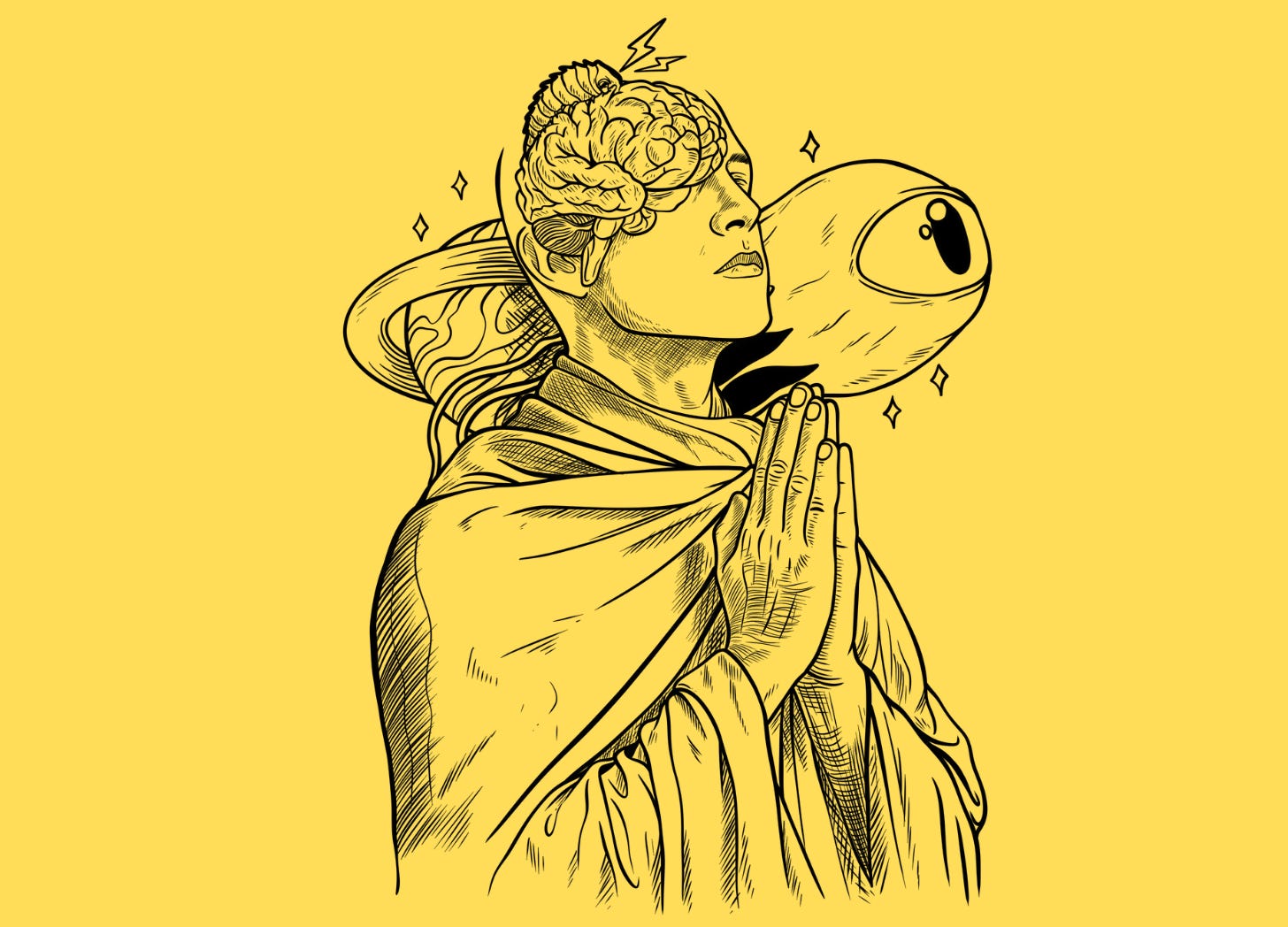
Psychedelics often reveal the unseen patterns in our lives that drain our life energy — such as toxic relationships, addictions, unhealed grief, chronic dissatisfaction, and self-sabotage.
The openness psychedelics create often uncovers these dormant patterns or memories — even if that process unfolds entirely within the unconscious mind.
During the psychedelic state, these forces rise to the surface in full intensity — vivid, emotional, and overwhelming — before slipping back into the depths of the mind.
We often feel as though they’ve come and gone, that the trip purged or released them. But in reality, the experience merely reawakened them — stirring what had long been dormant.
Without awareness and integration, they simply return underground in an active state, where they can quietly feed on our energy from below the surface.
Most of the time, we do a good job of keeping these patterns buried under layers of distraction. This tendency is especially relevant in today’s hyperconnected world, thanks to the tiny dopamine dispensers we all carry in our pockets.
But ignoring that noise doesn’t stop it from running. The mind keeps processing in the background — replaying old fears, rehearsing imagined futures, defending itself from invisible threats.
This constant low-level hum quietly drains our energy. It makes us feel weak and unsettled, foggy and irritable. It can affect our sleep, hinder our mood, and force us to move through life half-charged.
I think of it like a program that runs in the background on your computer. Even though the window is closed and you can’t see what it’s doing, it continues to run and sap energy from the system. It steals memory and takes up computational space — making everything else move just a little slower. When it gets bad enough, the system may even crash.
This metaphor aligns with the traditional view that spiritual parasites aren’t necessarily evil entities trying to harm or possess us — but expressions of imbalance.
Regardless of whether these parasites are “entities” that occupy space within the subtle body, or patterns of thought and emotion left running in the background, the path to healing always starts with awareness.
Once you notice what’s been feeding on your attention, your time, or your spirit, you can finally close the program and reclaim the energy it’s been quietly consuming.
Whether you call it shadow work, energetic cleansing, or trauma integration, the heart of the idea remains the same — that what we refuse to face ends up feeding on us.
Only when we finally turn toward it. When we stop chasing distractions and sit still long enough to listen — the parasite starves and the energy returns to its rightful owner.
Further Reading
Not All Who Trip Are Transformed: Beware The Spiritual Narcissist
The Spirit’s Call: Shamanism, Neo-Shamanism, & Altered States of Consciousness
Spiritual Arrogance (TZP)
Enjoying Tripsitter? 🍄
Don’t Journey Alone! Tripsitter was built by a community of psychedelic advocates — but it’s people like you that allow us to thrive.
You can also follow us on Bluesky or subscribe to our Reddit.