

Tim Scully: The Man Who Made LSD What It Should Be
Meet the psychedelic polymath behind Orange Sunshine LSD.



Tim Scully didn’t just ride the wave of the ‘60s. He engineered it.
His creation — Orange Sunshine — became the gold standard for what LSD could (and should) be.
This is the story of a scientist who risked everything not for money or power, but because he believed LSD could help humanity evolve.
The Life of Tim Scully
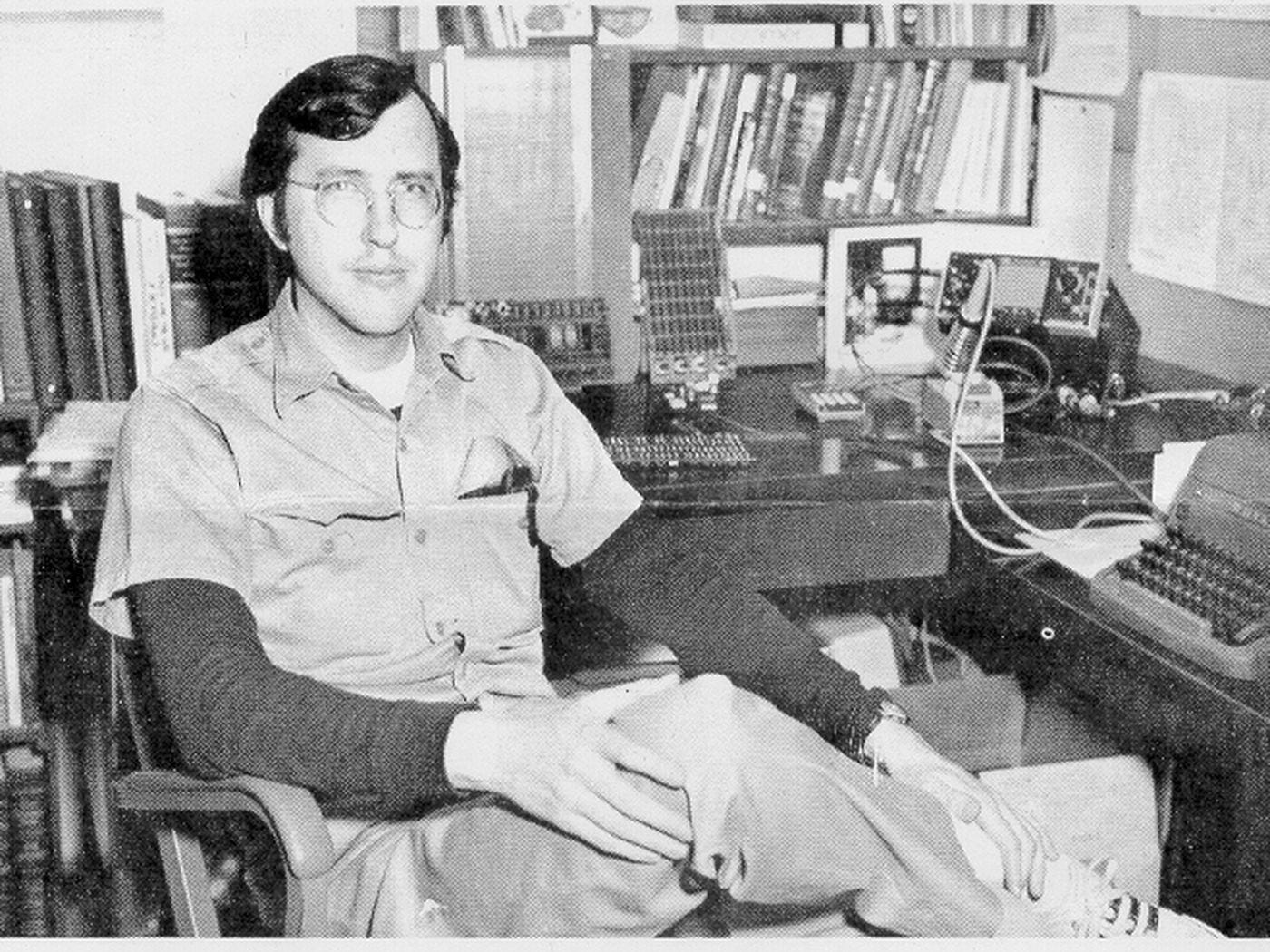
Tim Scully was a builder. At 14, he earned recognition at the Bay Area Science Fair for creating a homemade computer. By his junior year of high school, he had built a small particle accelerator — the kind of machine usually found in national labs, not garages.
He skipped his senior year to attend UC Berkeley, studying mathematical physics. But after two years, consulting work pulled him into the booming world of West Coast electronics.
Then came April 15, 1965 — his first LSD experience.
It wouldn’t be his last.
Apprenticed by the Underground
Scully’s fascination quickly turned into purpose.
In 1966, he joined Owsley Stanley in his Point Richmond lab — the beating heart of the psychedelic scene. Owsley was more than just an underground chemist — he was also the legendary sound engineer for the Grateful Dead.
Together, the duo produced White Lightning LSD — over 400,000 doses of exceptionally pure acid.
In 1967, Scully and fellow chemist Don Douglas opened the first Denver lab, producing Monterey Purple. Unfortunately, a police raid at a tableting facility in Orinda confiscated most of the batch (~100,000 tablets).
That December, Owsley was arrested and sentenced to three years in federal prison (of which he served just 2).
New Allies, New Labs
Rather than get discouraged at the busts and shutdowns, Scully found a new partner — Billy Hitchcock, heir to the Mellon fortune. Hitchcock brought both capital and a connection to lysergic acid — the precursor needed to produce LSD at scale.
With this lucritive new connection, Scully was able to set up a second Denver lab, which produced Blue Levis LSD. This venture was short-lived as the facility was busted in June 1968. Luckily, Scully was out sourcing more chemicals at the time — but it was another major loss.
Meanwhile, the chemistry network was evolving. In May 1967, Owsley had introduced Scully to Nick Sand. Owsley asked Scully to teach Sand how to make STP (DOM) — a potent psychedelic amphetamine invented by Alexander ‘Sasha’ Shulgin. Earlier that year, in February, Owsley had asked Scully to retool the first Denver lab to allow manufacturing of the new, and new and suddenly popular, STP alongside LSD.
Sand took what he learned and launched D&H Custom Research in San Francisco. This operation produced STP commercially, selling significant quantities to the Hells Angels.
As would become a running theme, this lab didn’t last long — police pressure forced the lab to suddenly shut down in July 1968, with Sand narrowly escaping arrest.
By late ’68, Scully was in a tight bind:
Two Denver labs were already lost
Most of his equipment was seized
Legal fees were starting to mount
His lab assistants were arrested
Only partial supplies remained
He still had a sizable amount of lysergic acid — but lacked some of the key reagents and the capital needed to turn it into LSD.
The chemistry wasn’t the real problem. The money — and the company he kept — was.
The Brotherhood & the Birth of Orange Sunshine LSD
After the second Denver bust in June 1968, Scully was cornered. He still had a substantial amount of lysergic acid — the most difficult material to source — but he lacked several key chemicals and the funds to process any of it into LSD.
To keep the mission alive, he approached Nick Sand again.
Sand had already demonstrated he could operate labs at scale — but his distribution channel (the Hells Angels) ran completely against Scully’s philosophy. He wanted LSD to open hearts and expand consciousness, not fuel violence and corruption.
So Scully offered a pact:
He would teach Sand everything he knew about manufacturing LSD — if Sand agreed to stop supplying violent groups and instead work with the Brotherhood of Eternal Love (a California-based psychedelic collective committed to spreading LSD for consciousness expansion rather than profit or violence).
Sand agreed.
Together they established a new lab in Windsor, California — a safer, cleaner, more sophisticated operation than anything Scully had run before.
And in January 1969, they produced their first batch of what would become the most legendary acid ever made — Orange Sunshine LSD.
Over the next five months, the Windsor lab produced nearly four million doses — the majority distributed not through gangs, but through spiritual seekers, surfers, artists, and hippies intent on sparking global transformation.

The Bust, the Trials & the Reinvention
Orange Sunshine spread far and fast — too fast for the authorities to ignore.
In May 1969, just months after Windsor’s first batch, Scully was arrested on a Denver warrant tied to the raid on the second Denver lab. Nearly overnight, he went from underground innovator to a man fighting to stay free.
For the next few years, he lived in a strange limbo:
Constant travel to Denver for court appearances
Legal fees piling up
The psychedelic movement was fracturing under federal pressure
Most people in his position would have retreated into fear. Scully simply started another company.
Drawing from early research showing that experienced meditators exhibit unique brainwave patterns, he began designing brainwave biofeedback instruments to help people learn voluntary control over their mental states.
It was a continuation of his original mission:
Expand awareness — by any means available.
He kept improving these systems for the next 15 years, including during his time spent behind bars.
Indictment, Conviction & Sentencing
The real legal blow arrived in April 1973, when Billy Hitchcock testified before a grand jury. Both Scully and Nick Sand were indicted.
Their trial stretched from October 1973 to January 1974, and the duo was convicted at the end of January.
One month later, Scully was sentenced to 20 years in prison.
He appealed and remained on supervised release until the process concluded in 1977. A later motion reduced his sentence by half — but the damage was done.
He ultimately served 40 months before being released on February 11, 1980.
Reinvention Behind Bars
Prison didn’t break Tim Scully. It sharpened him.
During his sentence, Scully:
Developed assistive technology for people with vocal handicaps.
Worked towards a Ph.D. in psychology from the Humanistic Psychology Institute (today, it’s called Saybrook University).
Continued refining computerized biofeedback and physiological monitoring tools, inspired by meditative brain-state research
Even when the system tried to control his mind, he focused on helping others understand theirs.
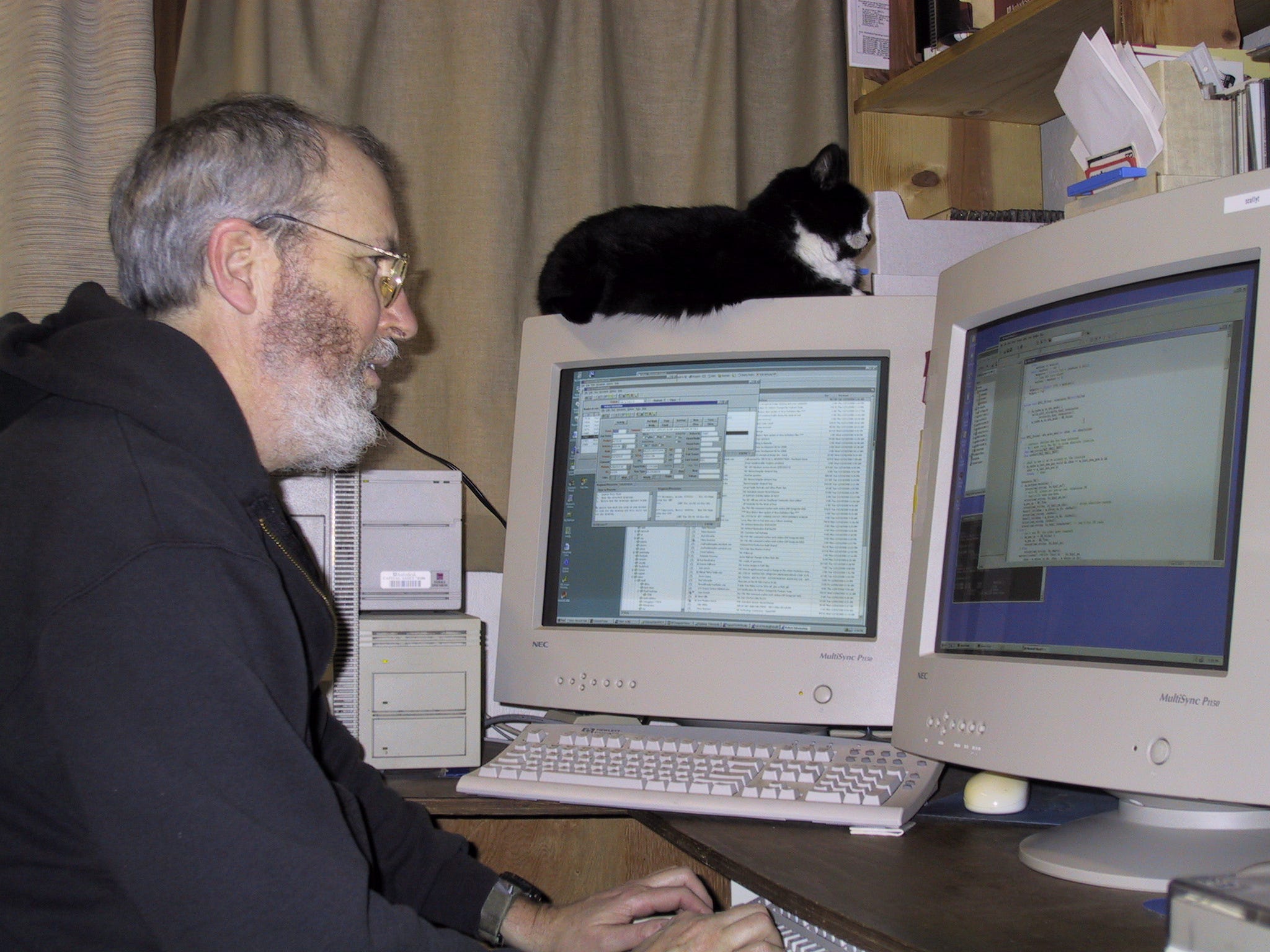
After his release, Scully went on to work on computerized physiological monitoring systems, write educational video game software, and eventually worked for many years at the engineering software company Autodesk as a senior software developer on its AutoCAD modeling software.
The Philosophy of Tim Scully
Scully’s worldview emerged from a rare blend of physics, psychedelics, and philosophy.
Before he ever touched LSD, his curiosity was shaped by books recommended by his childhood friend Don Douglas — texts like Tao Te Ching, Island, and The Doors of Perception.
These texts suggested that consciousness might be far more expansive than everyday perception implies. LSD simply provided the tools to test that hypothesis directly.
At the core of Scully’s philosophy is a belief that everything in the universe, living or otherwise, is connected — not in a purely mystical sense, but in a scientific one.
While still at Berkeley, he wrote a paper arguing that quantum mechanics provides a scientific framework for the theory that all entities in the universe can “feel” each other’s influence. Quantum mechanical wave functions have a theoretically infinite extent, so even distant objects may influence each other.
Where many encounter this idea through Eastern spirituality, Scully arrived through mathematical physics.
Psychedelics didn’t give him that belief — they merely confirmed it.
The sense of oneness he felt on LSD aligned exactly with the theoretical models he studied in physics:
We are not isolated individuals.
We are components of a single, continuous system.
This synthesis — rigorous science and direct experience — convinced Scully that LSD wasn’t just a drug. It was a tool for seeing the underlying unity of nature.
A doorway to understanding what’s always been there.
What Scully’s Story Teaches Us
Tim Scully’s life is a reminder that the psychedelic movement wasn’t built by thrill-seekers or opportunists — it was built by idealists. People who believed that opening the mind could change the world.
He paid a steep price for that belief, but he never abandoned it.
From clandestine labs to prison workshops to Silicon Valley software development, his mission stayed the same:
Help people see more clearly — both inside and out.
Today, as psychedelics inch toward mainstream acceptance, Scully’s story offers a reminder:
If we’re going to elevate consciousness, we should do it with integrity.
Orange Sunshine was never just a product. It was a philosophy — and Scully lived it.
Tim Scully Publications
Scully authored several peer-reviewed papers on consciousness, biofeedback, and computing during the 1970s and 1980s. Here are just a few of my personal favorites:
Learn More About Tim Scully in “The Sunshine Makers” Documentary
Further Reading
The King of Acid: Owsley “Bear” Stanley & the Psychedelic Underground
The Void Starer: How Philosophy’s Greatest Pessimist Discovered Cosmic Love
Aldous Huxley: The Literary Genius Who Opened the Doors of Perception
Enjoying Tripsitter? 🍄
Don’t Journey Alone! Tripsitter was built by a community of psychedelic advocates — but it’s people like you that allow us to thrive.
You can also follow us on Bluesky or subscribe to our Reddit.